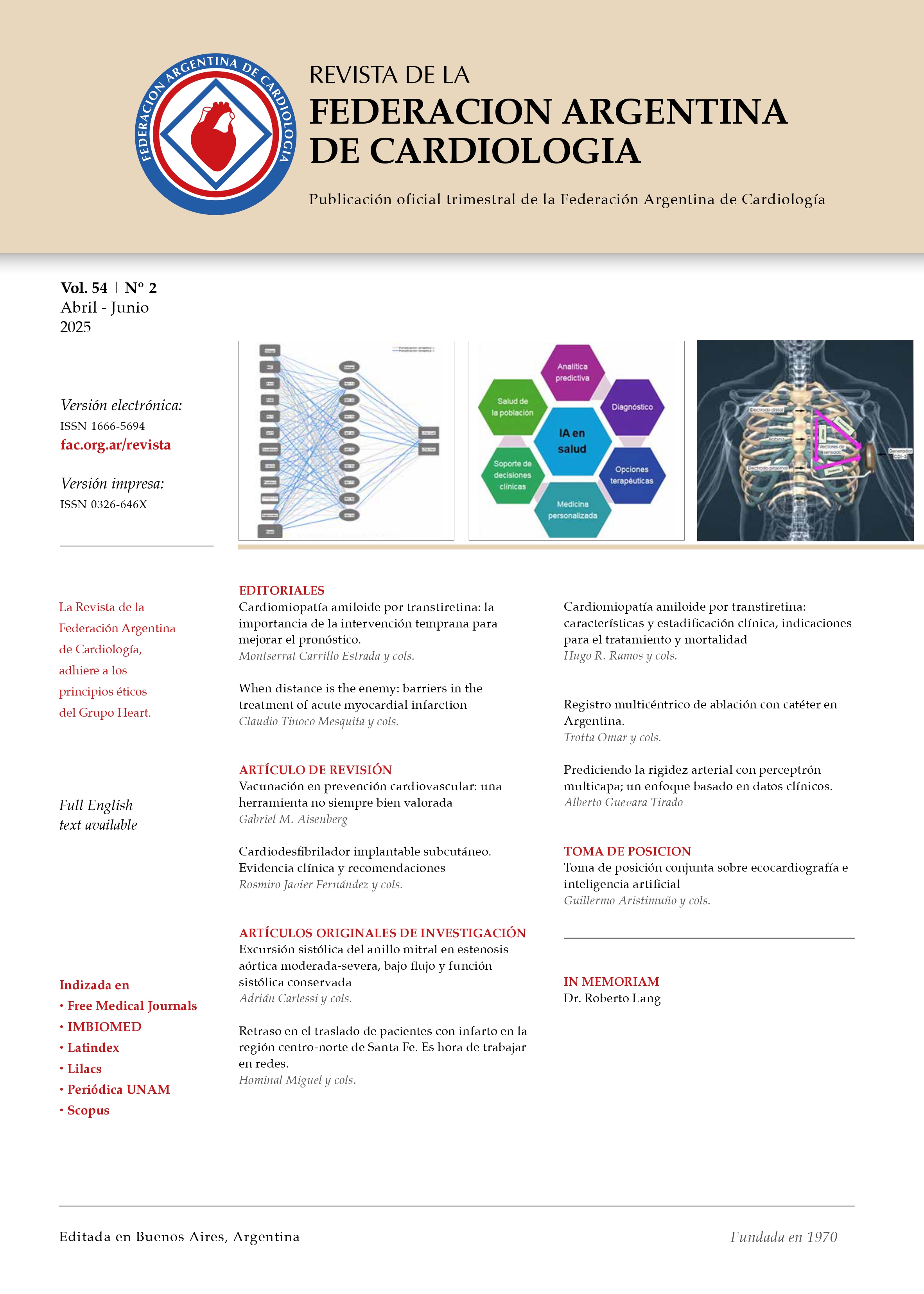
Subcutaneous implantable cardiodefibrillator. Clinical evidence and recommendations
DOI:
https://doi.org/10.63600/25wr2m11Keywords:
Implantable cardio-defibrillator, Subcutaneous implantable cardio-defibrillator, Sudden death, DefibrillatorAbstract
Currently, implantable automatic defibrillators (ICD) have demonstrated unobjectionable effectiveness in the primary and secondary prevention of sudden cardiac death (SCD) in the population of patients with high-risk heart diseases. However, its application is not free from complications. In response to this problem, the subcutaneous cardioverter defibrillator (S-ICD) emerged in 2009, a completely extracardiac and extrathoracic device, whose design has been optimized in recent years and which, despite its limitations, such as the absence of a pacemaker, has proven an efficacy not inferior to that of the conventional ICD, without the complications inherent to the procedure of handling it and the permanence of intravenous catheters. This makes the S-ICD a useful and effective option, being ideal for those patients who do not require anti-bradycardia or anti tachycardia cardiac stimulation or cardiac resynchronization.